Complete landscape installations
Drainage built into your project
Water is the reason most patios dip and most walls lean. On every install we plan where it goes before we build anything on top of it.
Water first
Before we draw a patio or a wall, we look at where the water goes. Where does it sit after a storm? Which way do the roof, the driveway and the neighbor's lot send it? Is the soil fast sand or dense till that holds water? The answers shape everything that follows, from the depth of the base to which way the patio pitches.
What drainage looks like in our projects
- Grading. Shaping the ground so water runs away from the house, off the patio and toward somewhere it can go.
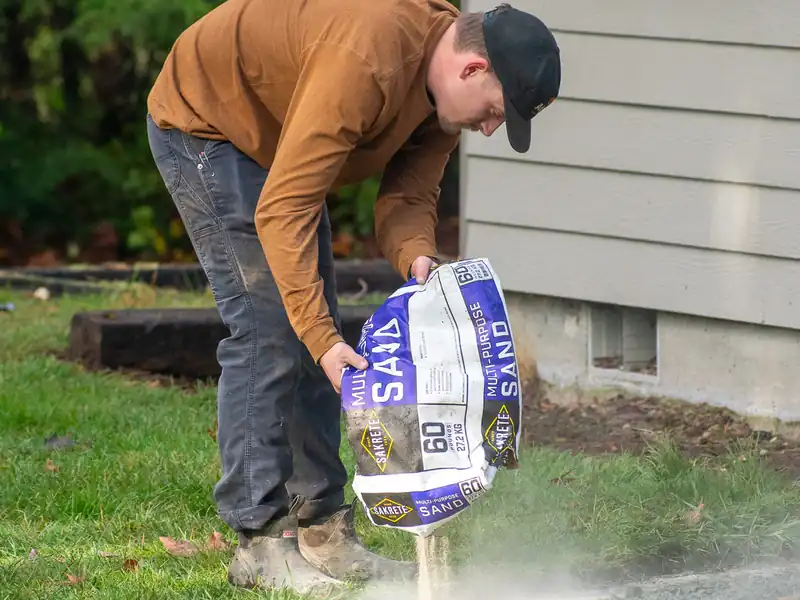
- Patio and path bases. A compacted crushed rock base that lets water through, built deeper on wet ground, with the surface pitched so rain sheds off.
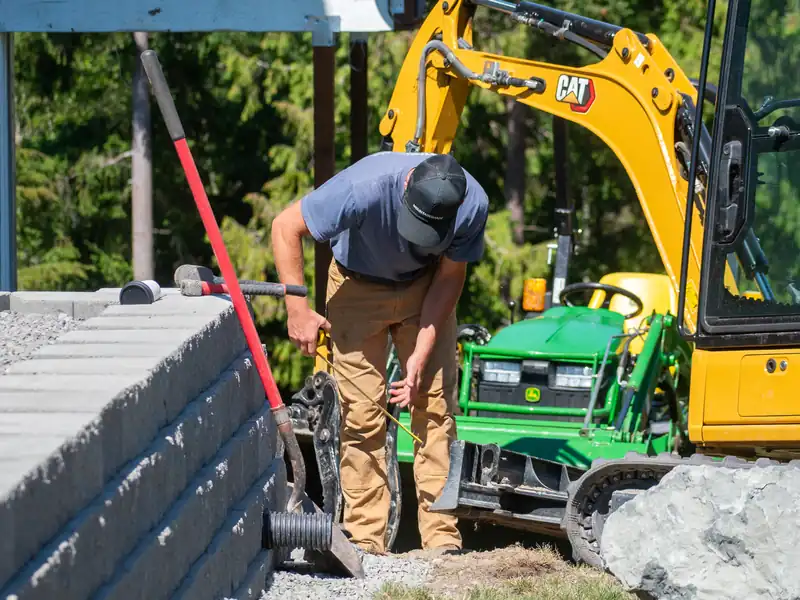
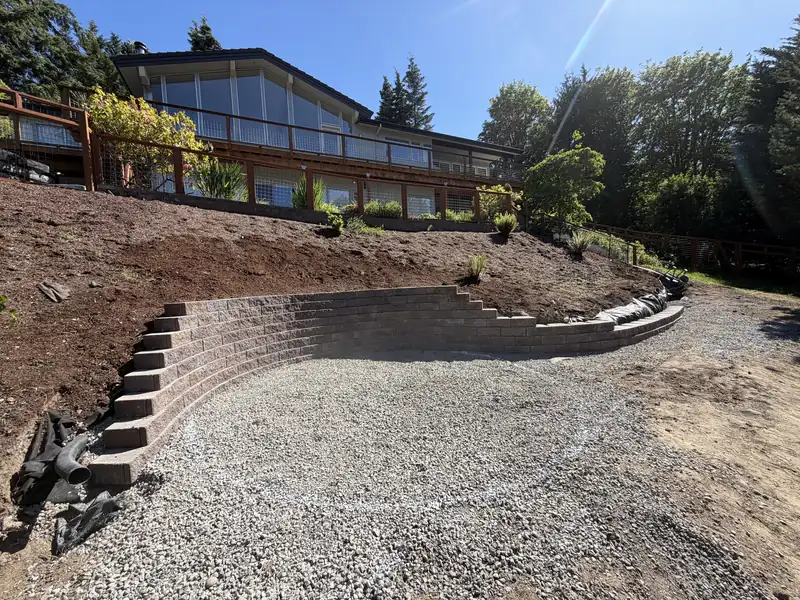
- Behind retaining walls. Clean drain rock and perforated pipe behind the block, with an outlet on the low side so water can't build up and push the wall over.
- Downspouts. Tying gutter downspouts into the drain system or moving them so they don't empty onto the new work.
- Beds and edges. Fabric, rock strips and edging that keep soil and water where they belong.
Why we build it in, not on
Drainage is cheapest and most reliable when it goes in while the ground is open. Once a patio is laid or a wall is backfilled, adding a drain means taking finished work apart. That's why we treat it as part of each project rather than an extra at the end.
Drainage as part of a bigger job
We don't usually take drainage-only jobs. Where we're useful is when water is part of a yard you're already changing: a soggy corner where you want a patio, a slope that needs a wall, a new build with bare dirt and downspouts emptying onto it. If you're planning work like that and water worries you, that's a good reason to call. We'll walk it with you at the free visit and fold the fix into the plan.
Sequim and Port Angeles soils
Much of the Sequim valley is dry, but glacial till sits close under the surface in many yards and holds water like a bowl. A patio on till without a good base will heave and dip, and a wall without drain rock will lean. Port Angeles gets noticeably more rain and more slopes, so runoff from uphill lots is often the first thing we plan around there.
Drainage on three recent projects
Bell Hill, Sequim
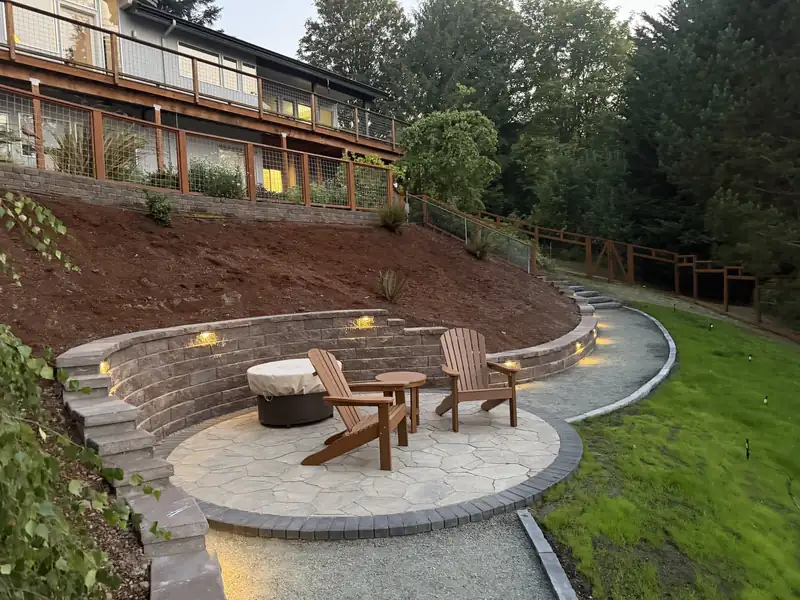
Cutting a seating area into a steep bank meant building several retaining walls, some buried out of sight, with drains tied in throughout. It took weeks of planning before the first cut. Read the Bell Hill story.
A large patio in Port Angeles
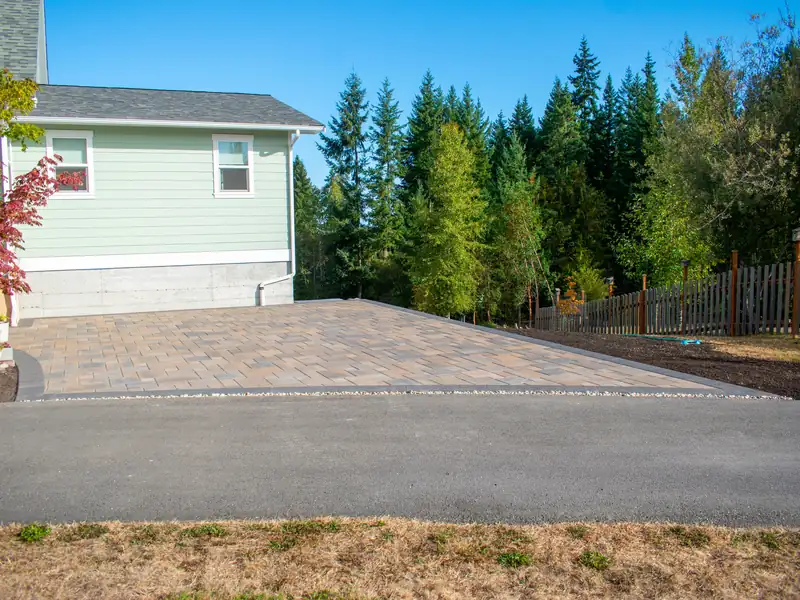
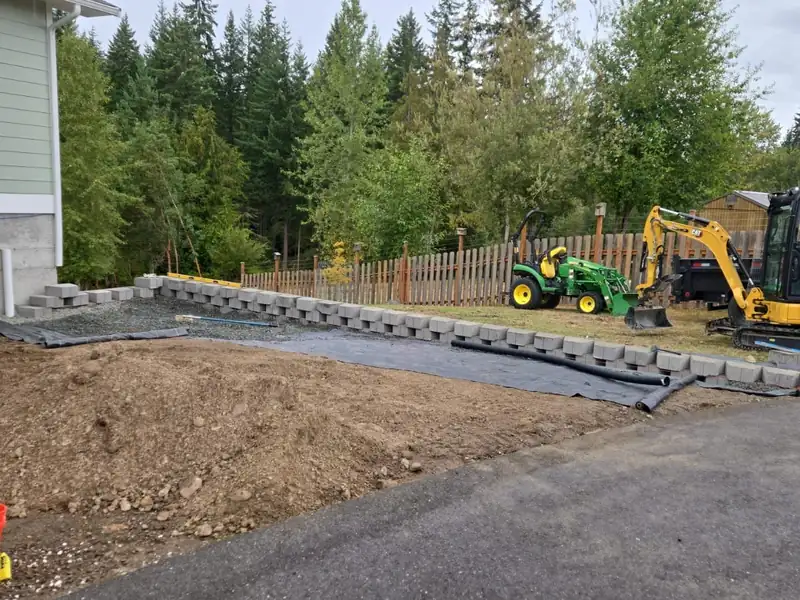
Drains run all through the base under this 1,000 square foot patio. They collect the water coming off the driveway and let it out on the low side of the tiered wall. We also worked around the septic system and moved the downspouts. Read the Port Angeles big patio story.
Kristen's steps and patio, Port Angeles
Water runs along this side of her house, so the new patio and raised bed had to send it the right way. We tied the drainage into the existing drains. Read Kristen's story.
Built into every wall and patio
Drainage is part of every retaining wall and paver patio we build, and it's the first step in a complete landscape installation.
Drainage questions
Do you take drainage-only jobs?
Not usually. We handle drainage as part of the patios, walls and landscapes we install. If water is a problem in a yard you're planning to change anyway, that's exactly what we plan around, so tell us about it when you reach out.
Why does my patio have a low spot?
Usually the base underneath was too thin, or water got under it and softened the soil. We dig past topsoil and build the base in compacted layers to avoid that.
Do retaining walls always need drains?
Any wall holding back soil needs a way for water to get out from behind it. Drain rock and an outlet are part of every retaining wall we build.
Can you move my downspouts?
Yes, when they're part of the project. On the Port Angeles patio job we tied in and moved the gutter downspouts so they didn't empty onto the new work.