Guide · Cost
What a retaining wall costs in Clallam County
Walls are priced by what they hold back, not just by how long they are. These are the factors that decide it.
Height changes everything
A two-foot garden wall and a five-foot wall holding up a driveway are completely different projects, even if they're the same length. As a wall gets taller, it holds back far more soil and water, so it needs a deeper base, more drain rock behind it, often geogrid tying it into the hill, and above a certain height an engineer and a permit. Height is the first thing to settle, because it shapes everything else.
Length and shape
Longer walls cost more, but not in a straight line. Corners, curves and steps in the wall line take more time and more cut block than a straight run. Ends where a wall dies into the slope need to be finished properly too.
What's behind the wall
The drainage is where good walls and cheap walls part ways. Clean drain rock, a perforated pipe at the base with somewhere to discharge, and fabric to keep fines out of the rock add real cost. On the glacial till and clay that cover much of the area, skipping them is the most common reason walls fail. A proposal that doesn't mention drainage is worth asking about.
The block or stone
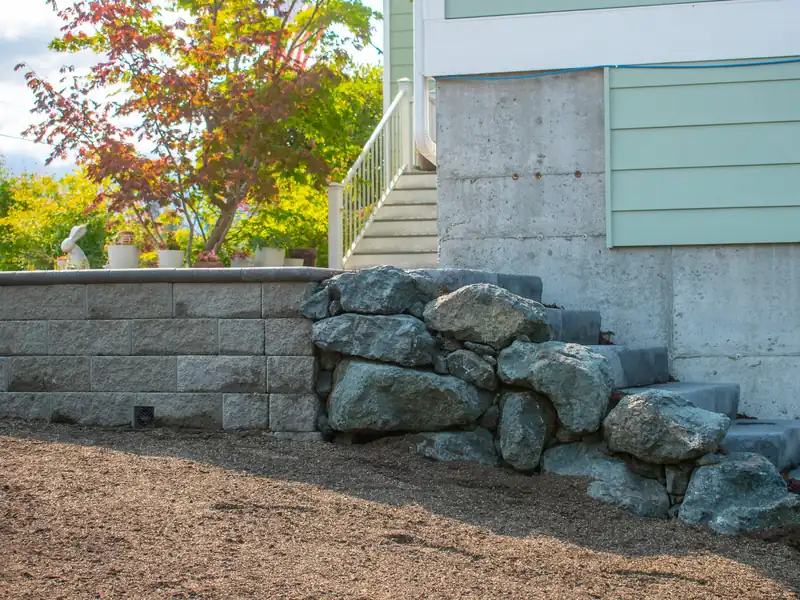
Segmental wall block comes in a range of sizes, faces and colors, and the price per square foot of wall face varies with it. Boulder walls are priced differently again, and some walls mix the two, like the tiered wall in Port Angeles.
Engineering and permits
Walls over about 4 feet generally need a permit, and often an engineered design, and a load above a wall can bring that in sooner. That adds design time, permit fees and sometimes inspections. We confirm what your wall needs after seeing the site, and we usually handle the permit side ourselves. Our wall permit guide covers the rule.
Access and digging
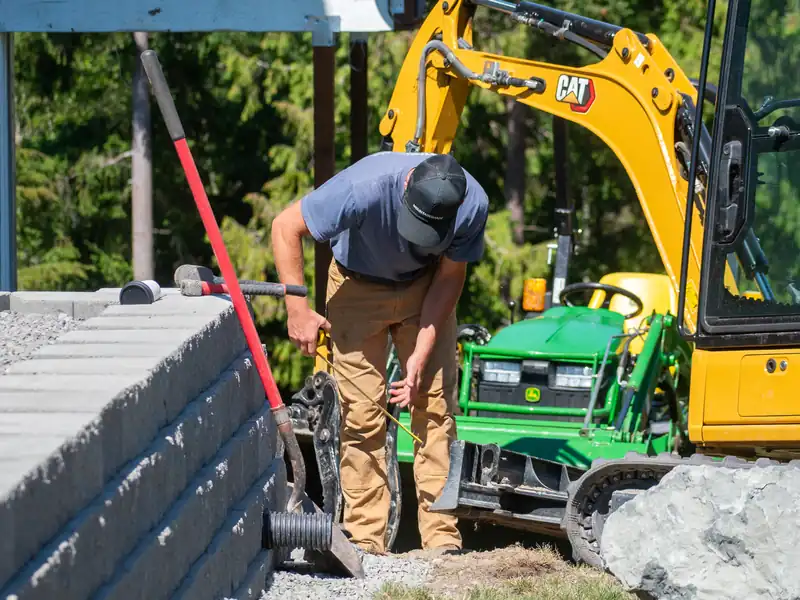
Walls involve a lot of digging and a lot of heavy material. If a machine can get to the wall line, the job moves faster. If everything has to be carried, it takes longer. Spoil from the dig-out either gets used on site to level the terrace behind the wall or hauled away.
Terraces cost less than you'd think
Two shorter walls stepped up a slope sometimes cost about the same as one tall wall, and they may avoid the engineering threshold altogether. They're also easier to drain and leave you a usable terrace in between. We'll price both if the site allows.
Wall cost questions
Is a cheaper wall without drainage ever worth it?
Not for a wall that's actually holding back soil. Water behind a wall is what pushes it over.
Do you price the terrace behind the wall too?
Yes. Leveling the new flat ground, and any paving or steps on it, are listed in the proposal.